Sesja poświęcona pamięci
Profesora Mieczysława F. Pazdura
Gliwice, 22 października 2005 roku
Biography
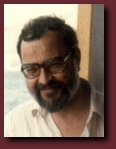
Mieczysław Franciszek Pazdur was born on 4th October 1946 in the picturesque town of Tuchów near to the Carpathian Mountains of southern Poland. At primary school he showed outstanding mathematical abilities and his secondary school education initiated a keen interest in physics. After leaving school Mieczysław entered the Faculty of Mathematics, Physics and Chemistry at the Jagiellonian University in Cracow in 1964. He developed a particular interest in theoretical physics of elementary particles and in 1969 submitted a thesis on "The electromagnetic interaction of elementary particles in U (6,6) model." for which he was awarded the degree of Master of Physics. In acknowledgement of his subsequent endeavours and growing scientific reputation Mieczysław's alma mater bestowed the degree of Doctor of Physical Sciences in 1978. A second doctorate followed in 1984 with the award of the degree of Doctor of Natural Sciences by the Institute of Geology in Warsaw.
Mieczysław's graduation in 1969 coincided with a period of political unrest in Poland. One consequence was that graduates of the University who held anti-communist opinions and had no immediate family ties with Cracow were required to find employment outwith the city. This situation prompted Mieczysław's initial move to Gliwice where he gained his first job as an assistant engineer in the Institute of Iron Metallurgy. His move to the Silesian Technical University came one year later when he joined the research group headed by Professor Mościcki. This was the initiation of the Gliwice Radiocarbon Laboratory and Mieczysław had an active and crucial role in those developments that lead to the first 14C measurements made in Poland and the subsequent application of this technique in dating natural samples.
Those early years in the history of the Gliwice Radiocarbon Laboratory are documented in Mieczysław's published work with Mościcki and Zastawny. The main scientific focus was on the design and routine operation of anti-coincidence gas proportional counters in natural 14C measurements, derivation of the associated statistical controls and definition of algorithms for age calculation. This contribution still forms the basis of the radiocarbon dating programme at Gliwice. The mid to late 1970's were also an important period in the development of Mieczysław's scientific career with his initiation of programmes of collaboration and cooperation with archaeologists and the other Earth Sciences disciplines that have a direct interest in applied 14C and TL dating. This initiative has grown to become widely recognised, not only in his native Poland, but throughout the international community.
Following the death of Professor Mościcki in 1977 Mieczysław was appointed to head the Radiocarbon Laboratory and the next several years proved a highly successful and satisfying period for the radiocarbon research group; M.F. Pazdur, A. Pazdur, R. Awsiuk, T. Goslar, and A. Walanus. Between 1978 and 1984 four new gas proportional counters with their associated vacuum gas handling systems were designed, constructed, and commissioned. At the same time A. Bluszcz, who had joined Mieczysław's group was developing a thermoluminescence dating facility to compliment the Laboratory's support for research in archaeology and Quaternary science.
The scientific progress achieved in the Gliwice Radiocarbon Laboratory under Mieczysław Pazdur's guidance was often in the face of considerable adversity. The early 1980's was a time of major political strife in Poland with a fast growing trend for popular rejection of the communist system. As a very active member of this opposition Mieczysław took a leading role in the organisation of a Solidarity Committee within the Silesian Technical University and edited the Solidarity Bulletin.
His high profile contribution towards the democratisation of Poland led to Mieczysław's arrest and detention for three months during the Marshal Law declared by the communist government, in 1982.
From 1981 until his death Mieczysław was head of the Department of Isotope Chronometry in the Institute of Physics at Gliwice. The Radiocarbon Laboratory is a part of that department which was renamed the Department of Radioisotopes in 1991. One of Mieczysław's primary endeavours as the head of the department was to initiate and foster liaison between other Polish institutions with a direct interest in the natural sciences and mainly under the auspices of the IGCP 158 international research programme. Active collaboration under that project has grown to include the committee of Quaternary Research of the Polish Academy of Sciences; the Geological Institute in Warsaw; the Institute of Quaternary Research of the Adam Mickiewicz University in Poznań; and the Institute of Geography and Spatial Organisation of the Polish Academy of Sciences in Cracow.
Other contributions to the furtherance of Polish science and in particular its international recognition have been in several areas. In 1983 Mieczysław organised the first national conference on 'Methods of Absolute Chronology' and the proceedings were published as the initial two volumes of a new journal (Geochronometry) under the aegis of the series of 'Scientific Notebooks of the Silesian Technical University; Mathematics and Physics'. This first discussion forum for Polish users and providers of radiocarbon and thermoluminescence dating technology is now an established triennial event; Mieczysław chaired the Fifth Conference held in Gliwice on 6th to 8th April '95. As a further promotion of the use and availability of isotopic dating methods in support of Polish science Mieczysław set up, in 1990 his Radiocarbon Foundation based in Gliwice. About that time, and again ever mindful of his laboratory's user community, he set about building the Gliwice radiocarbon database which now provides access to some 4000 records, i.e. almost 70% of the total dating effort so far completed in the Laboratory.
In the mid 1980's Mieczysław became increasingly interested in other dating methods and their potential application in environmental studies. At this time his first published work in the field of palaeoclimatic reconstruction appeared, based on isotopic analyses of freshwater carbonates (tufas and speleothems) and lake sediments. Continuation of this topic is one of the main research interests within the Department of Radioisotopes at Gliwice and has international attention for its promise of an essential contribution to absolute calibration of the conventional radiocarbon time-scale back through the enigmatic period of glacial to postglacial transition.
Worldwide awareness of the work of the Gliwice research group has been assured by scientific publication and active participation in international meetings and conferences. This reputation has been considerably strengthened by Mieczysław's determination to establish scientific cooperation with counterpart institutions across Europe and in the independent states of the former Soviet Union. Since 1985 various collaborative initiatives have linked the Gliwice Radiocarbon Laboratory with the universities of Cambridge, Ferrara, Glasgow, and Perpignan; institutes and museums in Sofia and Trydent; Centre des Faibles Radioactivities C.N.R.S. in Gif sur Yvette; the NERC Radiocarbon Laboratory in East Kilbride; the Institute of Geochemistry Ukrainian Academy of Science and Mineral Physics in Kiev; the IAEA in Vienna.
Mieczysław served as an invited member on the scientific advisory committee for the 15th International Radiocarbon Conference.
Mieczysław's graduation in 1969 coincided with a period of political unrest in Poland. One consequence was that graduates of the University who held anti-communist opinions and had no immediate family ties with Cracow were required to find employment outwith the city. This situation prompted Mieczysław's initial move to Gliwice where he gained his first job as an assistant engineer in the Institute of Iron Metallurgy. His move to the Silesian Technical University came one year later when he joined the research group headed by Professor Mościcki. This was the initiation of the Gliwice Radiocarbon Laboratory and Mieczysław had an active and crucial role in those developments that lead to the first 14C measurements made in Poland and the subsequent application of this technique in dating natural samples.
Those early years in the history of the Gliwice Radiocarbon Laboratory are documented in Mieczysław's published work with Mościcki and Zastawny. The main scientific focus was on the design and routine operation of anti-coincidence gas proportional counters in natural 14C measurements, derivation of the associated statistical controls and definition of algorithms for age calculation. This contribution still forms the basis of the radiocarbon dating programme at Gliwice. The mid to late 1970's were also an important period in the development of Mieczysław's scientific career with his initiation of programmes of collaboration and cooperation with archaeologists and the other Earth Sciences disciplines that have a direct interest in applied 14C and TL dating. This initiative has grown to become widely recognised, not only in his native Poland, but throughout the international community.
Following the death of Professor Mościcki in 1977 Mieczysław was appointed to head the Radiocarbon Laboratory and the next several years proved a highly successful and satisfying period for the radiocarbon research group; M.F. Pazdur, A. Pazdur, R. Awsiuk, T. Goslar, and A. Walanus. Between 1978 and 1984 four new gas proportional counters with their associated vacuum gas handling systems were designed, constructed, and commissioned. At the same time A. Bluszcz, who had joined Mieczysław's group was developing a thermoluminescence dating facility to compliment the Laboratory's support for research in archaeology and Quaternary science.
The scientific progress achieved in the Gliwice Radiocarbon Laboratory under Mieczysław Pazdur's guidance was often in the face of considerable adversity. The early 1980's was a time of major political strife in Poland with a fast growing trend for popular rejection of the communist system. As a very active member of this opposition Mieczysław took a leading role in the organisation of a Solidarity Committee within the Silesian Technical University and edited the Solidarity Bulletin.
His high profile contribution towards the democratisation of Poland led to Mieczysław's arrest and detention for three months during the Marshal Law declared by the communist government, in 1982.
From 1981 until his death Mieczysław was head of the Department of Isotope Chronometry in the Institute of Physics at Gliwice. The Radiocarbon Laboratory is a part of that department which was renamed the Department of Radioisotopes in 1991. One of Mieczysław's primary endeavours as the head of the department was to initiate and foster liaison between other Polish institutions with a direct interest in the natural sciences and mainly under the auspices of the IGCP 158 international research programme. Active collaboration under that project has grown to include the committee of Quaternary Research of the Polish Academy of Sciences; the Geological Institute in Warsaw; the Institute of Quaternary Research of the Adam Mickiewicz University in Poznań; and the Institute of Geography and Spatial Organisation of the Polish Academy of Sciences in Cracow.
Other contributions to the furtherance of Polish science and in particular its international recognition have been in several areas. In 1983 Mieczysław organised the first national conference on 'Methods of Absolute Chronology' and the proceedings were published as the initial two volumes of a new journal (Geochronometry) under the aegis of the series of 'Scientific Notebooks of the Silesian Technical University; Mathematics and Physics'. This first discussion forum for Polish users and providers of radiocarbon and thermoluminescence dating technology is now an established triennial event; Mieczysław chaired the Fifth Conference held in Gliwice on 6th to 8th April '95. As a further promotion of the use and availability of isotopic dating methods in support of Polish science Mieczysław set up, in 1990 his Radiocarbon Foundation based in Gliwice. About that time, and again ever mindful of his laboratory's user community, he set about building the Gliwice radiocarbon database which now provides access to some 4000 records, i.e. almost 70% of the total dating effort so far completed in the Laboratory.
In the mid 1980's Mieczysław became increasingly interested in other dating methods and their potential application in environmental studies. At this time his first published work in the field of palaeoclimatic reconstruction appeared, based on isotopic analyses of freshwater carbonates (tufas and speleothems) and lake sediments. Continuation of this topic is one of the main research interests within the Department of Radioisotopes at Gliwice and has international attention for its promise of an essential contribution to absolute calibration of the conventional radiocarbon time-scale back through the enigmatic period of glacial to postglacial transition.
Worldwide awareness of the work of the Gliwice research group has been assured by scientific publication and active participation in international meetings and conferences. This reputation has been considerably strengthened by Mieczysław's determination to establish scientific cooperation with counterpart institutions across Europe and in the independent states of the former Soviet Union. Since 1985 various collaborative initiatives have linked the Gliwice Radiocarbon Laboratory with the universities of Cambridge, Ferrara, Glasgow, and Perpignan; institutes and museums in Sofia and Trydent; Centre des Faibles Radioactivities C.N.R.S. in Gif sur Yvette; the NERC Radiocarbon Laboratory in East Kilbride; the Institute of Geochemistry Ukrainian Academy of Science and Mineral Physics in Kiev; the IAEA in Vienna.
Mieczysław served as an invited member on the scientific advisory committee for the 15th International Radiocarbon Conference.
Summary of scientific and organization achievements
Publications (258)
Co-editor of book "ANDES. Radiocarbon database for Bolivia, Ecuador, and Peru", Gliwice-Warszawa, 1994.
Author of chapters in books:
in foreign languages - 17
in Polish - 5
Papers in international journals - 64 (including 30 in Radiocarbon)
Papers in proceedings of international conferences - 33
Papers in proceedings of national conferences - 17
Articles in national journals - 59
Articles in Scientific Notebooks of Silesian Technical University including "Geochronometry" - 70
Achievements in the field of organisation of scientific research in Poland
- Performer of government's projects in 1981-1985:
- Changes of Poland geological environment. Project MR.I.25.
National culture monuments. Project MR.III.5.
The detailed geological map of Poland 1:50 000. Minister's project. - Performer of Central Research Projects 1986-1990:
- Methods of absolute Quaternary chronology. Project CPBP 03.13.
Methods of isotopic chronometry and their useful in archaeological researches. Project CPBP 04.14.
Physical methods of absolute chronology. Project 01.06. - Head of Polish Committee for Scientific Research project in 1991-1993:
- Methods of isotopic chronometry and their application in geology and archaeology. Research Project 6 0576 91 01.
- Head of many (about 100) small scientific research projects in cooperation of Silesian Technical University and other scientific institutions from Poland and from abroad in the field of radiocarbon dating.
Achievements in the field of organisation of international scientific research
- Performer of IGCP project in 1978-1986:
- Palaeohydrological changes in the temperate zone during the last 15 000 years. Project IGCP 158.
- Head of IAEA projects in 1988-1995:
- C-14 dating of freshwater carbonate sediments with special references to calcareous tufas and laminated sediments. Project RB 5179, 1988-1991.
Upgrading of the laboratory for radioactive dating and environmental radioactivity monitoring. Project POL/8/012, 1993-1996. - Performer of European Community project in 1994-1996:
- Extension of the radiocarbon time-scale into the Late Glacial. Project CIPDCT 925048.
- Cooperation with Andean Archaeological Mission of Warsaw University on the base of NASCA project carried out by Italian Archaeological Mission in Peru and the "Alto Piura" Project carried out by Pontificia Universidad Catolica del Peru, from 1988 until Mieczysław's death.
Organisation works
- Head of Gliwice Radiocarbon Laboratory since 1977 until death.
- Dean of Mathematics and Physics Faculty Silesian Technical University, from 1993 until death.
- Head of Department of Radioisotopes in the Institute of Physics Silesian Technical University, from 1981 until death.
- Administration's President of Radiocarbon Foundation in Gliwice from 1990 until death.
- Member of Administration of Silesian Technical University Foundation from 1993 until death.
- Member of Presidium of Quaternary Research Committee Polish Academy of Sciences and Chairman of Chronology and Absolute Dating Section this one for 1985 until death.
- Member of Palaeogeography Commission of Polish Academy of Science in Cracow, from 1985 until death.
- Expert of International Atomic Energy Agency in radiocarbon dating on Latin America countries: Peru, 1989 and Brazil, 1992.
- Member of National Committee INQUA of Presidium Polish Academy of Sciences, from 1993 until death.
- Member of Scientific Committee 15th International Radiocarbon Conference, Glasgow, 1994.
- Chairman of Organisation Committee of 1st (in 1983), 2nd (in 1986), 3rd (in 1989) and 4th (1992) Conferences "Methods of Absolute Chronology", Gliwice.
- Chairman of Scientific Committee as above in 1995.
- Member of Organisation and Scientific Committee of Conference "Chronology of Polish Past. Problems of the correlation absolute and relative time scale", Kraków-Igołomia, 1994.
- Member of European Physical Society, from 1974 until death.
- President of Gliwice Section of Polish Physical Society, 1988-1992.
- Chairman of Administration of Radiocarbon Laboratory Association Central and Eastern Europe, from 1994.
Scientific educational achievements
- Professor conferring the many master's degrees.
- Professor conferring the doctor's degrees:
-
Awsiuk Romuald, 1985: Local changes of concentration C-14 isotope in atmospheric CO2 in Upper Silesia region.
Bluszcz Andrzej, 1986: Thermoluminescence dating of geological sediments.
Goslar Tomasz, 1990: Measurements of natural C-14 radioactivity with higher precision and changes of C-14 concentration in atmospheric CO2 during the X/XI millennium BP.
Hercman Helena, 1990: The reconstruction of West Tatras geological environment on the base of speleothems isotopic dating.
- Reviewer of numerous papers on master's and doctor's degree.
- Author of a textbook for students of "Environmental Physics" in the Faculty of Mathematics and Physics, Silesian Technical University: "Basis of Geophysics".
Some didactic works
- Created and prepared an educational programme for students of "Environmental Physics" in the Faculty of Mathematics and Physics, Silesian Technical University: 1990-1992.
- Scientific supervisor of "Physics and Ecology" competition organized for pupils of secondary schools in cooperation with QUARK group from "Palace of Youth" in Katowice: 1994-1995.